

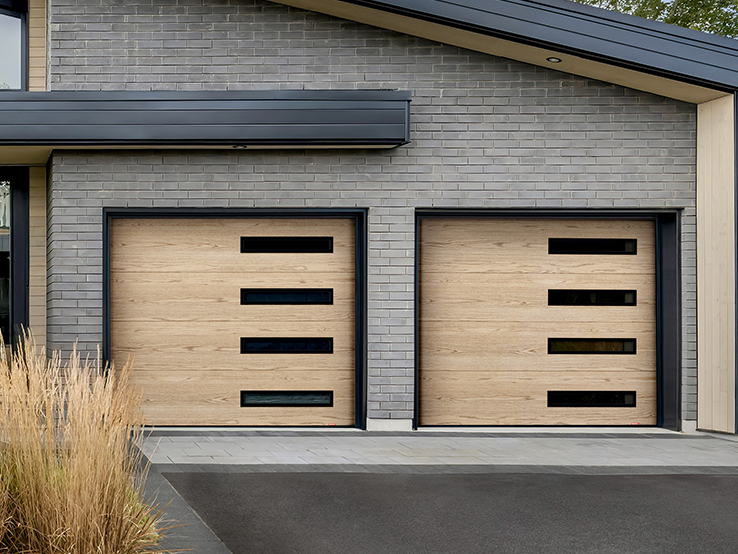
Don’t compare door prices. Compare the cost per year of service. Once you see what drives that number, including steel, insulation, springs and labor, the cheapest quote rarely looks cheap for long.
Steel thickness sets the baseline
Sectional doors are the most common style for homes with an attached garage. They use horizontal panels that travel up and back along side tracks. Roller doors work differently. They coil into a drum above the opening, freeing up ceiling space.
Steel gauge is the starting point for cost. Thinner 26-gauge steel costs less and suits a garage you open only occasionally. Thicker 24-gauge steel holds up better when family life puts it to work every day. It resists dents from bikes and bins, and it stays flat through years of vibration.
You can’t judge gauge by the paint. Two doors can look identical from the street yet age in very different ways. That’s why cost per year of service starts here. A light panel that dents early may force a repair or replacement sooner than planned. When you open the door twice a day for school runs and work, thin steel shows wear quickly, while heavier-gauge steel keeps its lines straight and seals tight through regular use.
Ask for the gauge in the quote. Ask how the panels lock together and whether bracing is built in. We raise those questions on every job because panel strength affects what the springs and opener must handle later. Pay for the strength you will actually use.
Insulation decides comfort and price
An uninsulated single-layer door is the basic starting point. It consists of one sheet of steel with exposed framing inside. A double-layer door adds insulation bonded to the back, often with a steel or vinyl rear cover that holds it in place.
That construction changes daily use. Insulated panels feel stiffer, run more quietly and hold heat back in summer while retaining warmth during colder months. If your garage shares a wall with the living space, you’ll notice the difference in the rooms next door.
R-value is how manufacturers rate resistance to heat flow. A higher R-value slows heat transfer, but you don’t need to memorize every number. You need to match the rating to the way you use the space. A storage-only garage can manage with less insulation. A home office or gym above the garage cannot.
Weight is the catch. Insulation adds pounds, so heavier doors need stronger springs and a motor sized for the load. The cost therefore rises in two places. The door costs more, and the hardware required to lift it does too. When the garage sits under a bedroom or beside a home office, insulation and a quiet drive will matter far more in daily life than glass or decorative trim.
We size insulation to the house rather than the brochure. Tell your dealer how you use the space and let them specify what fits.
Springs are the hidden price gap
Quotes can list the same panels and still land far apart. Springs are often the reason.
Extension springs run along each side of the door. They stretch to help lift it and cost less to manufacture and fit. They suit lighter doors that don’t cycle often.
Torsion springs mount on a shaft above the opening. They twist to store lifting force and cost more upfront. Their more balanced, controlled movement spares the panels and places less load on the opener.
Safety also separates the two systems. Extension springs store force while open. If one breaks, it can fly across the garage unless safety cables contain it. Torsion springs remain on the shaft when they break, reducing the risk to nearby cars and people.
Service life completes the picture. Torsion sets are built for more cycles under daily family use, while extension sets wear faster when the door is heavy or tall. Because a heavier insulated door works hard each morning and night, the wrong spring can sag early and drag the opener with it. Ask for the cycle rating in writing. Ask which spring type appears in your quote by name.
It’s a five-minute check that shows whether you’re buying years of calm use or setting yourself up for early service calls. Don’t skip it.
Openers and smart control
The door is one purchase. The opener is another. Mix them together and budgets begin to drift.
Chain drives pull with a metal chain. They cost less, but they hum and rattle more. Belt drives use a rubber-based belt and operate with less noise, though they cost more. If bedrooms sit above or beside the garage, you’ll hear the difference each morning.
Battery backup provides access during a blackout by letting you operate the door when mains power drops. Smart control is about convenience. It lets you check the door’s status and control it from your phone, and it can alert you if you leave the door open at night.
You don’t need every add-on for a safe setup. Force settings and auto-reverse provide the essential safety functions. The rest comes down to convenience and habit. We match the motor to the door’s weight first. A heavy double-layer sectional needs genuine torque, whereas a small single roller does not.
Skip what you won’t use.
Pay for quiet operation if noise bothers you. Choose backup power if outages affect your street. Leave the rest off the ticket.
Why a garage doors brand name changes the quote
Two doors can share the same appearance and still differ in the support behind them. That’s where the badge matters.
Unbranded stock can be tempting when the initial number is low. The shape looks right and the color is close, but the support after installation may be missing. There may be no tested parts list, trained fitter network or clear route to finding spares in five years.
Established manufacturers invest in testing and consistent part specifications. They train fitters to level tracks and tune springs to the correct weight. They also hold replacement parts, so a broken bracket doesn’t automatically mean buying a new door. This support makes a garage doors brand name a real cost consideration rather than simple markup for a logo.
A licensed local provider such as AllStyle Garage Doors & Window Shutters builds that care into the job through reliable fitting and clear warranty handling. You won’t have to chase spare parts on your own.
The paperwork should split coverage into two parts. Manufacturer coverage deals with defects in panels and motors, while dealer coverage applies to fitting and setup. If a quote blends them into one vague promise, ask for details. Long, clear coverage costs more because the firm expects to honor it.
We don’t recommend the most expensive badge for its own sake. We look for the right fit between price and support. If you plan to stay in the property, reliable service access beats a small upfront saving.
Size, glass and decoration
Size is a quiet budget lever. Stock widths dominate the market because factories produce them in bulk. Parts are readily available, and crews can fit them quickly.
Custom work interrupts that flow. A tall or wide opening requires longer tracks and cut-down panels. It also needs springs wound for that exact weight and adds time with two people working on ladders. If you’re framing a new opening, matching a stock size is often cheaper than paying for a special build because custom dimensions slow both factory production and installation.
Glass and trim raise the total cost. Window inserts bring daylight into a dark garage, but they reduce insulation where the glass sits and need seals that won’t leak. Carriage overlays add curb appeal, while new handles add a finishing touch. None of those additions helps the lifting system run more smoothly.
We use a street test. Walk across the road and look back at the house. What catches your eye first may be worth the money, while the rest is often visual noise. A clean color and straight lines usually beat expensive glass you won’t wash.
Roller doors follow the same calculation. A standard width with a standard drum is the value option. Add extra height or vision slots, and the cost rises with the parts and fitting time.
What moves shutter prices
Shutters have their own cost structure, with material leading the calculation.
Most homes use aluminium or PVC. Timber still appeals to people seeking a heritage look, although it requires painting and regular care to remain sound.
Aluminium keeps its shape in hot weather and takes knocks without cracking. PVC won’t rust and wipes clean, but cheap sheets can bow or fade after hot summers. Timber has a warm appearance, though it can swell in rain if the seals fail.
Coating comes next. Bare metal and thin paint can chalk and pit near sea air. Powder-coated or anodized skins cost more when ordered, but they retain their color and resist rust where salt travels on the wind. Skipping that protection to save money now often leads to an earlier replacement.
Wind load is another factor. High-wind zones require stronger guides and braced slats, adding both weight and fitting time. The reinforcement is functional rather than decorative. It holds the curtain in the tracks when hard gusts push against it. On exposed streets where storms drive rain sideways for hours, suitable bracing and a sound coating can determine whether the shutter stays in place or buckles.
Ask what alloy or sheet is included in the quote. Ask which coating and wind class apply. If those lines are blank, you aren’t comparing like with like. You’re comparing hope with hardware.
Labor, removal and warranty scope
Fitting is where cheap quotes often hide gaps. Panels attract attention, but labor rarely does.
The old equipment must come out first. Crews remove the door and tracks, haul them away and leave a clean opening. New tracks need accurate leveling and firm fixing. Springs must be tuned to the door’s exact weight, while openers require force checks and reverse tests. That set of tasks takes hours and skill, forming a substantial part of what you pay.
Thin quotes make cuts here. Installers may hang new panels on tired tracks or reuse worn rollers to lower the cost. That combination strains motors and wears panel edges quickly. Manufacturers test doors as matched systems, and mixing in old parts can invalidate coverage when faults appear.
Coverage again divides into two areas. Manufacturer terms handle defects in panels and motors, while dealer terms cover fitting and tuning. Long, clear terms cost more because firms plan to return when called. Short, vague terms cost less because there is less support behind them.
Don’t buy on the sticker price. Buy on years of service. Add the door, fitting and likely servicing, then divide that figure by the expected years of reliable use. A complete system with matched tracks and new springs will run longer with less trouble than a patchwork of old and new parts. The low quote with weak springs and limited coverage rarely wins that calculation.
Appearance still has value. Fresh paint and straight trim improve the front of any home. Garage door replacement recoups roughly 94% of its cost in added home resale value (Remodeling Magazine). Daily convenience now, combined with money back when you move, is difficult to beat.
Buy for years rather than installation day. Choose steel and springs that match your use. Pay for fitting that keeps the house safe.