

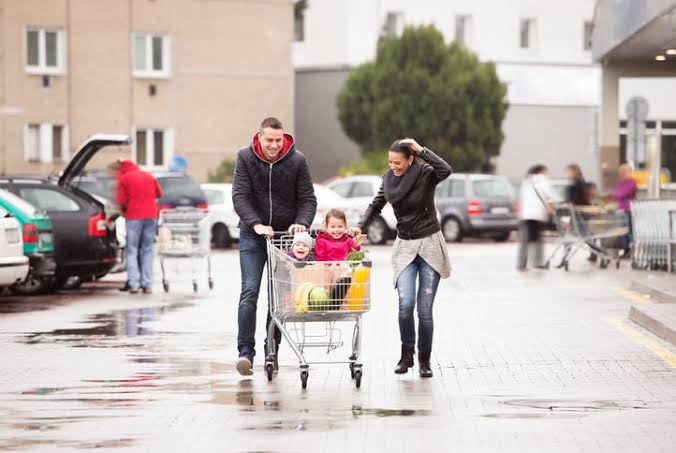
Parking lots combine moving vehicles, pedestrians, reversing cars, shopping carts, delivery trucks, blind corners, and narrow spaces within a small area. Low speed is the simplest defense because it gives you more time to detect hazards and stop before a minor conflict becomes a collision.
Expect Movement From Every Direction
Unlike a normal road, traffic inside a parking lot may cross your path from almost any angle. Drivers reverse from spaces, pedestrians walk between vehicles, and carts can roll unexpectedly into travel lanes.
Keep scanning beyond the vehicle immediately ahead. Watching several parking spaces on both sides can help you notice brake lights, reversing lights, moving wheels, open doors, or people preparing to step into the lane.
Drivers managing several vehicles may explore vehicle management resources as part of broader operational planning, but attentive observation remains essential at walking speeds.
Treat Pedestrians as the Main Priority
People leaving stores may be carrying bags, supervising children, checking phones, pushing carts, or looking for their parked vehicle. They may not notice an approaching car immediately.
Slow down near entrances, crosswalks, cart-return areas, and busy pedestrian routes. Be prepared to stop rather than assuming eye contact means someone will wait.
Planning your approach before entering a crowded commercial area can also help. General route-planning references may be useful when comparing access points or unfamiliar destinations.
Watch Carefully Around Children
Children can be difficult to see between parked vehicles and may change direction suddenly.
If families are nearby, reduce speed further and avoid squeezing past until you are certain the path is clear.
Reverse With Extra Care
Backing out creates major blind areas, particularly when larger vehicles are parked beside you. Move slowly and continuously scan mirrors, windows, and any available camera view.
A reversing camera is useful, but it shows only part of the surrounding area. Do not rely on the screen alone.
Vehicle condition also matters during low-speed maneuvering. Drivers looking into routine maintenance may find tire condition resources, while any specific tire damage or pressure concern should be checked using appropriate manufacturer information or professional advice.
| Parking Lot Hazard | Where It Appears | Safer Response |
|---|---|---|
| Reversing vehicle | Parking rows | Slow and prepare to stop |
| Pedestrian | Store entrances | Yield and allow space |
| Shopping cart | Open lanes | Watch for rolling movement |
| Blind corner | Buildings or ramps | Approach slowly |
Choose Parking Spaces With Visibility in Mind
The closest parking space is not always the easiest or safest choice. A slightly more distant space may provide better visibility, fewer reversing conflicts, and more room to maneuver.
Where practical, a space that allows a straightforward exit can reduce the amount of reversing required later. This can be particularly helpful in busy lots where traffic patterns become more congested over time.
Avoid parking so close to oversized vehicles that your view becomes completely blocked when leaving.
Common Parking Lot Habits That Create Risk
One mistake is driving faster because speeds are low compared with public roads. Even at modest speed, a pedestrian can appear from behind a parked vehicle with little warning.
Cutting diagonally through empty spaces is another poor habit. Other drivers may be following marked lanes and may not expect a vehicle to cross several rows unpredictably.
Phone distraction is also dangerous here. A parking lot may look simple, but its concentration of small, rapidly changing hazards means your attention should stay outside the vehicle.
Frequently Asked Questions
Who should you watch most carefully in a parking lot?
Pedestrians deserve particular attention, especially children, older adults, people using mobility aids, and anyone emerging from between parked vehicles where visibility is restricted.
Are parking lot accidents usually caused by reversing?
Reversing is one common conflict, but parking lots also create risks from pedestrians, cross traffic, turning vehicles, shopping carts, opening doors, and drivers traveling across marked spaces.
Is a backup camera enough when reversing?
No. A camera is an additional visibility aid rather than a replacement for checking mirrors, windows, blind areas, and the wider surroundings before and during movement.
Slow Speed Gives You More Options
Parking lot safety depends less on advanced driving skill than on patience and observation. Move slowly, expect pedestrians and vehicles to appear from hidden areas, and avoid competing for a few seconds of saved time. The more unpredictable the surroundings become, the more useful a calm, deliberate pace becomes.