

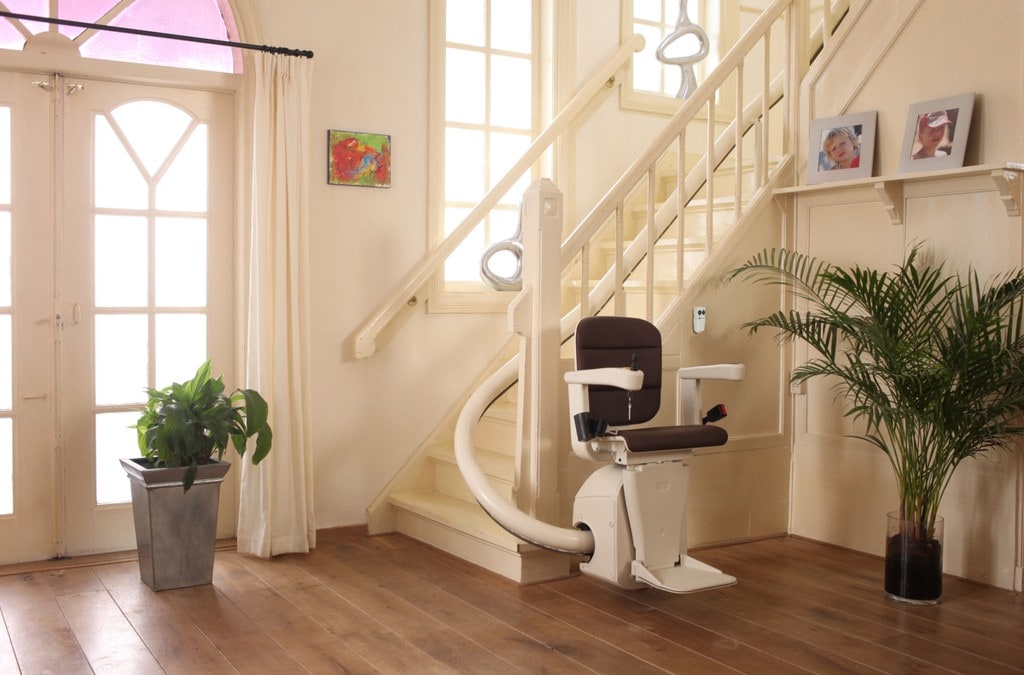
A stair landing should give people a stable place to change direction, open a door, or prepare for the next flight of steps. Boxes, shoes, bags, decorative items, and loose household objects reduce that safe space. Clearing the landing is one of the simplest ways to improve movement because people no longer need to sidestep obstacles near an edge or step.
Protect the Natural Walking Line
People usually follow the shortest comfortable path across a landing. If storage blocks that route, they may turn sharply, step sideways, or place a foot closer to the stair edge.
Reviewing everyday home layouts can help identify where objects interrupt normal movement. Keep the most direct route completely open rather than leaving a narrow channel between belongings.
Remove Temporary Clutter Quickly
Items often appear on landings because someone intends to carry them upstairs later. The problem is that temporary storage can quietly become permanent.
Create another collection point away from the stairs for things waiting to be moved.
Keep Doors From Creating New Obstacles
Some landings sit directly outside bedrooms, bathrooms, closets, or exterior doors. A basket or cabinet that looks safely positioned may interfere with the door swing and force people toward the stairs.
Better interior space planning accounts for both the walking route and the full movement of nearby doors. Open every door fully when judging whether an object belongs on the landing.
| Landing Hazard | Better Choice | Safety Benefit |
|---|---|---|
| Shoe piles | Store elsewhere | Clearer footing |
| Loose rugs | Secure or remove | Less slipping |
| Boxes | Relocate immediately | Wider path |
| Dim corners | Improve lighting | Better edge visibility |
Improve Visibility Around Each Step
Clutter becomes more dangerous when the stair edge is difficult to see. Make sure lighting reaches both the landing and the first step in each direction.
Broader household safety planning should also consider shadows from furniture, plants, or decorative objects. A light fixture cannot help much if a large object blocks illumination from reaching the floor.
Keep Handrail Access Open
Do not place tall items beside the point where a handrail begins or ends. People may need that support while turning onto the landing.
Bags hanging from railings can also interfere with a secure grip.
Think About Rugs and Small Furniture
A narrow console or decorative stool may fit physically without being a good choice. If people must rotate their body to pass it, the usable width is already too small.
Rugs deserve similar attention. They should remain flat and secure; otherwise, a raised corner can catch a shoe precisely where balance matters most.
Why Organizing Isn’t Always Enough
Neatly arranging clutter does not automatically remove the hazard. A row of shoes is still occupying walking space even if every pair lines up perfectly.
The better question is whether an object needs to be on the landing at all. Stair areas work best when storage is minimal. Moving possessions to a nearby closet, wall cabinet, bedroom, or entry zone is often safer than trying to organize them beside the steps.
Frequently Asked Questions
Is it okay to keep a shoe rack on a stair landing?
Only when it does not reduce the normal walking route, block doors, limit handrail access, or place footwear near the stair edge. Another storage location is often preferable.
Should decorative tables be used on large landings?
They may work where substantial clearance remains, but they should never force people to change direction abruptly or squeeze between furniture and the stairs.
How often should stair landings be checked for clutter?
A quick check whenever you use the stairs can prevent gradual buildup. Households that frequently leave bags, laundry, toys, or deliveries near stairs may need a regular clearing routine.
Keep the Landing Simple
The safest landing is usually an uncomplicated one. Keep the walking line wide, preserve access to handrails, remove loose floor items, and make sure doors can open without redirecting people toward the stairs. Treat the landing as part of the staircase rather than spare storage space, and everyday movement becomes easier and more predictable.